Chronic Sinusitis Treatment & Fungal Defense
 What does chronic sinusitis and fungal infections have in common? Apparently, quite a lot. In a recent study published in Mayo Clinic Proceedings, 210 consecutive patients that were going through chronic sinusitis treatment (101 treated surgically) were studied for fungal infections. Fungal cultures of nasal secretions were positive in 202 (96 percent) of the sinusitis patients. What does chronic sinusitis and fungal infections have in common? Apparently, quite a lot. In a recent study published in Mayo Clinic Proceedings, 210 consecutive patients that were going through chronic sinusitis treatment (101 treated surgically) were studied for fungal infections. Fungal cultures of nasal secretions were positive in 202 (96 percent) of the sinusitis patients.
Among the leading offenders, Candida albicans was cultured in 15.4 percent of the sinusitis samples; Alternaria in 44.3 percent; Penicillium in 43.3 percent; Cladosporium, in 39 percent; and various Aspergillus species in 29.5 percent. Many other fungal organisms were also cultured, although less frequently.
What’s more, "allergic mucin" containing clusters or sheets of degenerating eosinophils was found in 96 percent of samples. Eosinophils are prominent at sites of allergic reactions and with parasitic larvae infections (helminthes). Fungal debris (hyphae, destroyed hyphae, conidiae, and spores) was found in 81 percent of the 101 surgical specimens. What’s more, allergic fungal sinusitis was diagnosed in 93 percent of the surgical cases, based on histopathologic findings and culture results.
These findings suggest that fungal allergy is extremely common in patients with chronic sinusitis. "Considering how common chronic sinusitis is, and how difficult it is to treat with conventional approaches, further investigation of the role of fungus infection/allergy is urgently needed," notes nutrition expert Alan Gaby, M.D.
However, be wary of conventional tests for such allergies, he advises. Using tests to measure IgE levels and skin-prick tests usually fail to detect fungal allergy in most sinusitis patients, even if they have allergic fungal sinusitis that is severe enough to require surgery.
Protocol for Healing Sinusitis
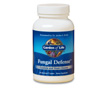
We recommend for chronic sinusitis and certainly before you opt for surgery to correct sinusitis, that you try a clinically tested anti-fungal preparation such as Fungal Defense from Garden of Life. FD was developed to combat a wide range of such infections after research indicated that the Homeostatic Soil Organisms ™ (HSOs), contained in another Garden of Life product, Primal Defense™, were highly effective in eliminating systemic candida infection. HSOs take up residence in the body’s gastrointestinal tract. They are very hardy and have been shown in clinical studies to help displace harmful pathogenic fungal species, causing their populations to decline dramatically, restoring homeostatic balance. They also produce bactericidal chemicals that decimate pathogenic bacterial strains.
These HSOs were first available in Primal Defense™ from Garden of Life. However, with the impressive clinical results available that showed virtual elimination of systemic candida, Garden of Life’s Jordan Rubin, N.M.D., C.N.C., combined HSOs with other anti-fungal herbs and enzymes to create a formula specifically for the body's FD.
FD contains some of the most powerful anti-microbial agents found in nature, along with HSOs. Among these, wild oregano and olive leaf as well as garlic, and yucca juice are recognized for their potent anti-fungal, anti-bacterial, anti-viral, and anti-parasitic properties.
Their primary fungicidal components work synergistically to help eliminate yeast and fungus. In addition, the herbs in FD have each been made body-ready by the company’s Poten-Zyme™ process. This lengthy fermentation process utilizes beneficial bacteria (including HSOs) to "predigest" these herbs, thus liberating many of their beneficial constituents as well as stimulating production of novel acidic components with anti-microbial properties. So be sure to try this natural approach first.
REFERENCES
Ponikau J.U., et al. "The diagnosis and incidence of allergic fungal sinusitis." Mayo Clin Proc 1999;74:877-884.
Iina, A.V. “[Depolymerization of high-molecular-weight chitosan by the enzyme preparation Celloviridine G20x].” Prikl Biokhim Mikrobiol, 2002;38(2):132-135.
Rustia, M. & Shubik, P. “Experimental induction of hepatomas, mammary tumors, and other tumors with metronidazole in nonbred Sas:MRC(WI)BR rats.” Journal of the National Cancer Institute, 1979;63:863-868.
Saporiti, A.M., et al. “[Vaginal candidiasis: etiology and sensitivity profile to anti-fungal agents in clinical use].” Rev Argent Microbiol, 2001;33(4):217-222.
**These statements have not been evaluated by the Food and Drug Administration. These products are not intended to diagnose, treat, cure, or prevent any disease.
This link will redirect you from...
Sinusitis to Fungal Defense
|
 |